Trips
Confirmed and in-progress itinerary pages.

Oslo September 2026
Starts in 44 days
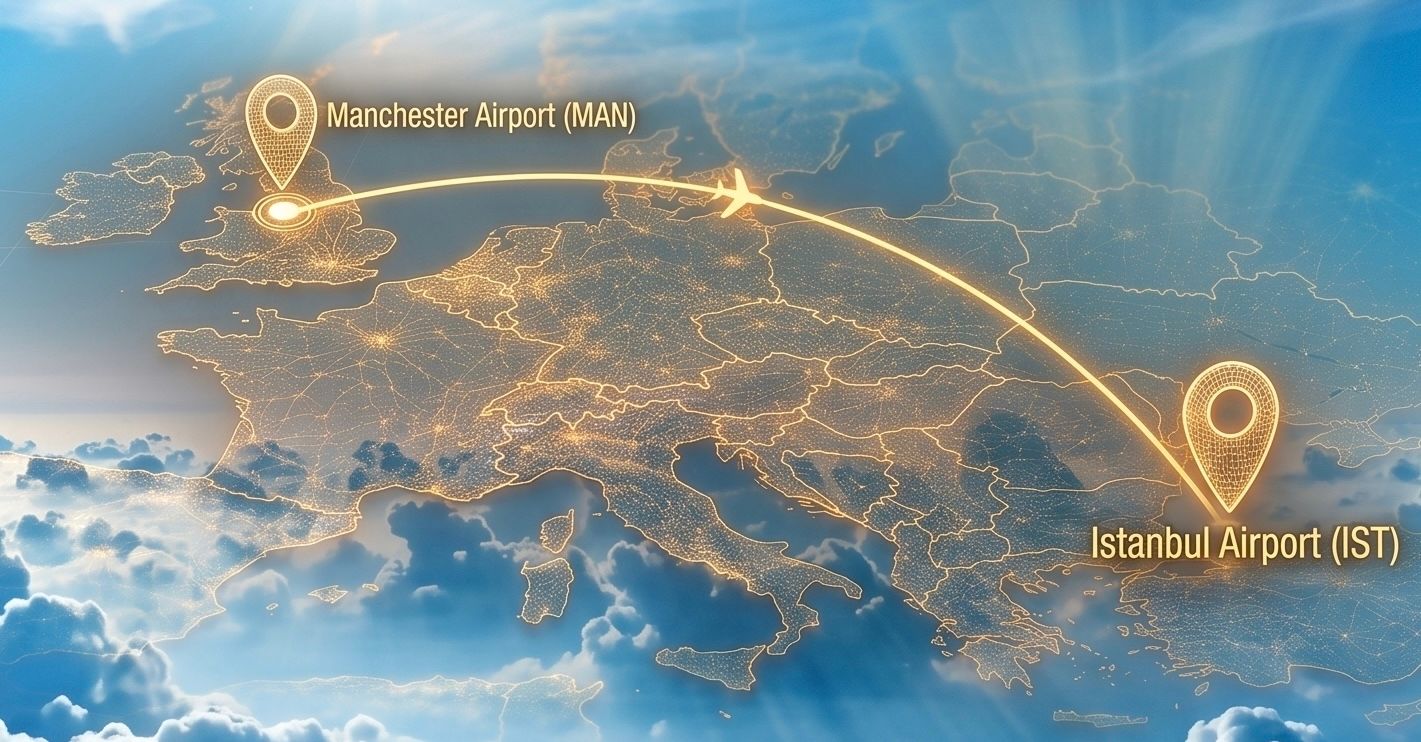
Istanbul October 2027
Starts in 56 days

Tenerife November 2026
Starts in 91 days
Los Cristianos is a vibrant coastal resort town in southern Tenerife known for its beautiful beaches, lively harbor, and family-friendly attractions. Whether you want to relax on the golden Saharan sand, embark on an ocean adventure, or stretch your legs with a scenic hike, it offers a fantastic mix of activities.

China April 2027
Starts in 239 days
A 15-night China route from Beijing to Shanghai, designed around a few high-pressure moving parts rather than a loose city hop. Beijing carries the arrival reset, Universal, the Forbidden City and the Great Wall; Xi'an is a tight one-night stop for the Terracotta Army; Zhangjiajie gets the most weather protection; Chongqing adds hotpot, night views and a show before the Shanghai finish. The shape is strong, but the trip still needs a proper 2027 verification pass for visas, train releases, domestic flights, show seasons, ticket windows and image sourcing.
Hotel Searches
Snapshot comparisons generated from a specific brief.
Zhangjiajie (72 Wonders Tower) October 2026 hotel search
72 Wonders Tower (72奇楼文旅小镇), Zhangjiajie, China
Top pick: JI Hotel, £37/night, within the £50 target, 94% from 488 real reviews, 9 min walk from 72 Wonders Tower. Three more real, in-budget-or-flex, well-reviewed options within an 11-minute walk: Amazing Loft Hotel (£31, 93%, 1,091 reviews), Zhangjiajie Xiaomi Yard Homestay (£23, 89%, 44 reviews), and Moonview Boutique Guesthouse (£52, 99%, 38 reviews, within the £65 flex). All four prices were live-checked directly against their real booking pages for these exact dates. (Revision history for this run is in the notes below.)
Es Cana, Ibiza September 2026 hotel search
Es Cana beach / resort centre, Ibiza, Spain
Top pick: Hotel Boutique Las Arenas, £142.88/night via Expedia — a region-locked price (may need a VPN or region switch to book), genuinely reachable and cheaper than Booking's UK-facing £156.34 for the same room. Every hotel card shows a full per-source pricing table, cheapest first, with region-locked rows labelled, so you can judge for yourself rather than one 'canonical' number being picked for you. (Revision history for this run is in the notes below.)
Zhangjiajie (72 Wonders Tower) April 2027 hotel search
72 Wonders Tower (72奇楼), Zhangjiajie, Hunan, China
1-night stay, 13-14 April 2027. This re-run uses the corrected 72 Wonders Tower reference point (the original run was 4.1km off, near Tianmen Mountain Cableway instead). Once corrected, almost nothing in this destination's real hotel inventory is genuinely close on foot: only 2 of 43 gathered candidates fall inside a 25-minute walk. The rest — including nearly every well-reviewed, well-priced option — sit 34 minutes to 7+ hours away, because Zhangjiajie's hotel supply concentrates in the city centre and the separate Wulingyuan Scenic Area, not around this specific rural landmark. Top pick by location, Free Pick Up Zhangjiajie 72 Wonder Tower Neighbour's House (8 min walk, £53/night, air-con confirmed), has zero reviews on any source — a real gap in evidence, not a red flag, but worth weighing. Every other candidate is shown too, flagged by distance/budget/review status rather than hidden, per the new soft-filter design — this is a genuinely thin destination for this specific POI, and that's worth seeing directly rather than a short, misleadingly-clean list.
Oslo (Norwegian Parliament) September 2026 hotel search
Storting (Norwegian Parliament), Oslo, Norway
City break, 2 nights. Oslo is genuinely expensive this period — no candidate landed within the £100 target; every survivor with a confirmed price is in the £111-135 flex band. Air-con and fridge were explicitly nice-to-haves, not filters, so nothing was excluded on amenities. Comfort Hotel Børsparken is the strongest all-round pick: known price (£132/night), large review sample (5,761), central. Two properties without confirmed pricing — Thon Hotel Rosenkrantz Oslo and Hotel Christiania Teater — score higher and sit closer, worth checking direct rates on before booking.
Wulingyuan, Zhangjiajie April 2027 hotel search
Wulingyuan, Zhangjiajie, China
FULL RE-RUN 2026-07-17, exercising every fix built after this session's failure review: the nameSimilarity dedup fix, the walk-limit flex band, the pin-conflict/shared-pin/source-proximity guards, geocode.js --verify, and a full Tripadvisor live-browser fallback gather (its MCP search_hotels tool was down again this run). Reference point re-verified against two independent sources and left unchanged (~230-400m agreement, nothing like the 72 Wonders Tower error). 19 real, well-evidenced survivors, most with substantial review samples. Hansu Exotic Inn is the clear top pick: 3 min walk, £17/night, 97% across 285 reviews — cheap, close, and well-evidenced, not just the top score.
Corralejo, Fuerteventura February 2027 hotel search
Corralejo, Fuerteventura, Spain
Nine survivors, pool confirmed on all bookable ones (several needed a live amenity check since Tripadvisor's search results don't carry amenity data — 'null' meant unconfirmed, not absent); Galera Beach is the clean pick strictly at the stated £80 target, Las Casitas de Corralejo the best evidence quality if the budget flexes a little.
Corralejo, Fuerteventura February 2027 hotel search (air-con required)
Corralejo, Fuerteventura, Spain
Comparison variant: same Corralejo search, air-conditioning treated as a hard requirement alongside pool. Drops the 4 survivors whose air-con status was never confirmed by any source (La Concha Del Mar, Las Marismas De Corralejo, Surf Riders Fuerteventura, Fuentepark Apartamentos), leaving 5. Galera Beach still tops it.
Corralejo, Fuerteventura February 2027 hotel search (air-con not required)
Corralejo, Fuerteventura, Spain
Comparison variant: identical result set and ranking to the main Corralejo run — air-conditioning was never a stated requirement, only pool was, so this is the unmodified baseline, republished under its own slug for a side-by-side comparison with the air-con-required variant.
London Stadium, 9 August 2026 (Stratford) hotel search
Stratford, London, United Kingdom
Stratford station anchors both a non-driving and a driving+parking route home from a London Stadium finish (~90 min hold-and-release egress); Moxy is the closest/cheapest well-reviewed pick for the non-driving route, while the Westfield Stratford City cluster (Hyatt Regency, Hyatt House, Premier Inn, Autograph Collection, The Gantry, Adagio) sits in the same complex as the nearest parking (£16/day capped) for the driving option.
The Bund, Shanghai April 2027 hotel search
The Bund, Shanghai, China
7 survivors from a genuinely dense, expensive central-Shanghai market: 62 raw listings gathered across all four sources, but the majority (35+) were excluded on price alone — the Bund is a premium waterfront district and most hotels within easy walking distance run £120-500+/night. What's left is a solid budget/flex-tier cluster (£46-105/night, 7-14 min walk) of mid-range Chinese chain hotels (JI Hotel, Jinjiang, Atour) plus one hostel and one homestay — genuinely good value options exist here, they're just a minority of the market.
Lintong District, Xi'an April 2027 hotel search
Lintong District, Xi'an, China
Only 2 survivors, both Trip.com-sourced: Booking and DirectBooker returned zero walkable listings for these April 2027 dates because small independent properties near this specific site cluster don't open booking calendars that far ahead (confirmed by re-querying the same search 3 months out, which returned a bookable property 200 yards from the reference point) — not a coverage gap in those sources. Trip.com's first two search attempts also silently returned central Xi'an results instead of Lintong before the district-specific location code was found. Both survivors are well within budget and close to the reference point, but this is a shallow result set, not a confidently exhaustive one.
Bell Tower, Xi'an April 2027 hotel search
Bell Tower, Xi'an, China
Ten survivors clustered tightly around the Bell Tower (3-15 min walk). Cleanliness evidence, not raw score, drove the top of this ranking — Holiday Inn Express has a bigger review base but a documented, repeated mould complaint; Campanile and Hilton Garden Inn both have verified 5/5 cleanliness subratings.
Jiefangbei, Chongqing April 2027 hotel search
Jiefangbei, Chongqing, China
Adding Trip.com nearly tripled the survivor count (6 to 15) and reset the picture entirely: several sub-£25/night options now sit 4-6 minutes from Jiefangbei with tens of thousands of combined reviews at 93-97%. Budget is no longer the binding constraint here — style fit is still weak across the board.
Los Cristianos November hotel search
Los Cristianos, Spain
One option lands exactly on budget; six more quality-passing options appear if the cap flexes to about £110/night.